



 Bird & Pigeon Pest Control
 MOUSE & RAT Pest Control
 Fly Pest Control
 Cockroach Pest Control
 Mosquito Pest Control
 Mole Pest Control
 Wasp Pest Control
 Moth Pest Control
 Bed Bug & Flea Pest Control
 Ant & Termites Pest Control
 Spider Pest Control
 Other Insect Pest Control
 Snake Pest Control
 Snail & Slug Pest Control
 Wildlife Pest Control
 Garden Products
 Virus Control
 Smart AI Trap
 Insecticides


Industry News
What Is Integrated Pest Management (IPM) and Why Should You Use It?
 By Haierc Pest Control
2026-03-16
read
By Haierc Pest Control
2026-03-16
read

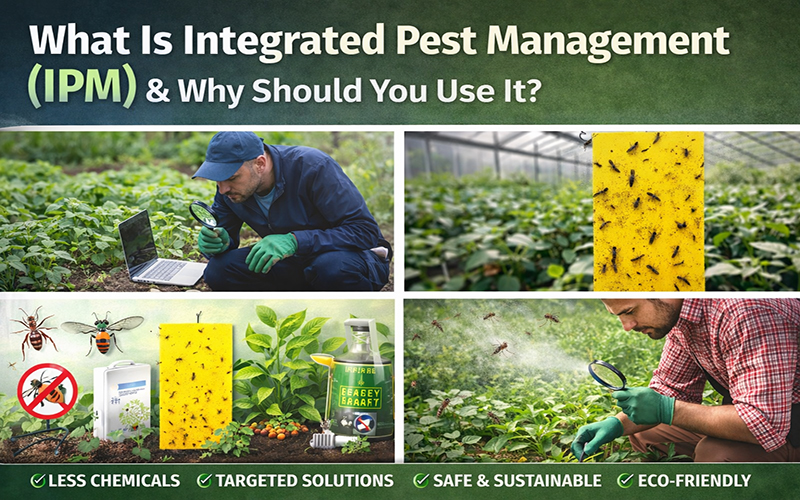
The four pillars of IPM:
1.Identification: Correctly identifying the pest species determines the appropriate response. Treating for ants with cockroach bait accomplishes nothing. A common beetle in your pantry might indicate a food storage problem, not a need for insecticides.
2.Monitoring: Rather than treating on a schedule regardless of pest activity, IPM uses sticky traps, visual inspections, and pheromone lures to track pest presence and population levels. Treat only when a problem actually exists — and target exactly where activity is concentrated.
3.Prevention: Modify the environment to make it less hospitable. Seal entry points, reduce moisture, eliminate food sources, maintain landscaping to reduce harborage. Prevention is always more cost-effective than treatment.
4.Control — least toxic first: When control is necessary, IPM prioritizes methods in this order: physical controls (traps, barriers), biological controls (natural predators, Bti for mosquitoes, nematodes for soil pests), then chemical controls starting with the least toxic option. Broad-spectrum pesticides are a last resort.
Why IPM matters in 2026: Pest populations are developing resistance to many common insecticides faster than new products can be developed.
Overuse of pesticides also kills beneficial insects — including pollinators and natural predators of pest species — creating secondary pest problems. IPM’s targeted, low-chemical approach is increasingly adopted across both residential and commercial settings as the most sustainable and effective framework.
For homeowners, implementing IPM doesn’t require a degree in entomology.
It simply means being strategic: know what you have, know what’s attracting it, eliminate those attractants, use the right tool for the right problem, and track whether it’s working.
- Share this:

-



Category
Trending Now